Salon Professional: connected B2C and B2B e‑commerce and 90% fewer warehouse errors
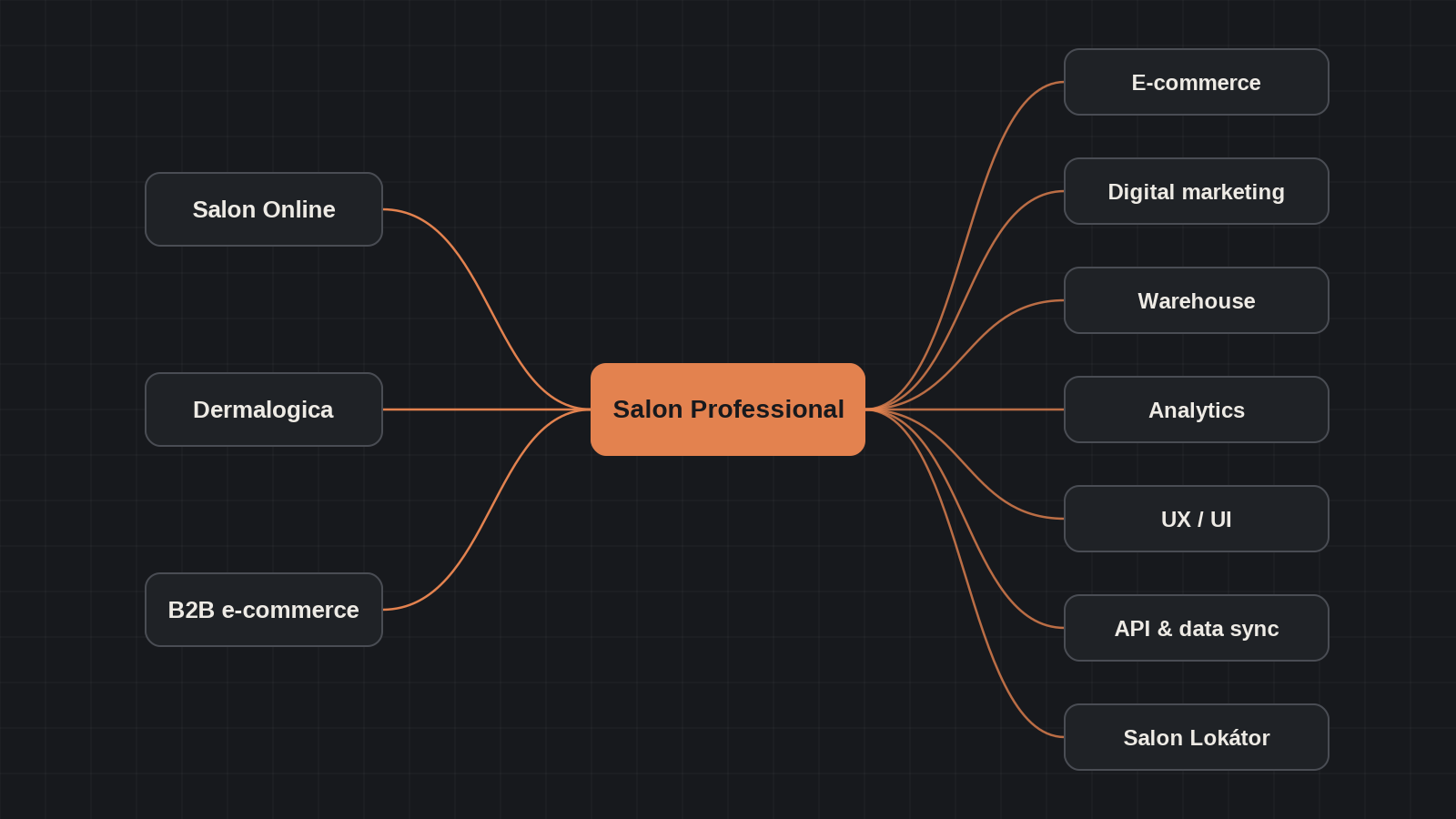
Digital and e‑commerce transformation of a professional cosmetics business (2019–2026): two B2C e‑shops – Salon Online and Dermalogica – alongside B2B e‑commerce, integrations, automation and redesigned warehouse processes.
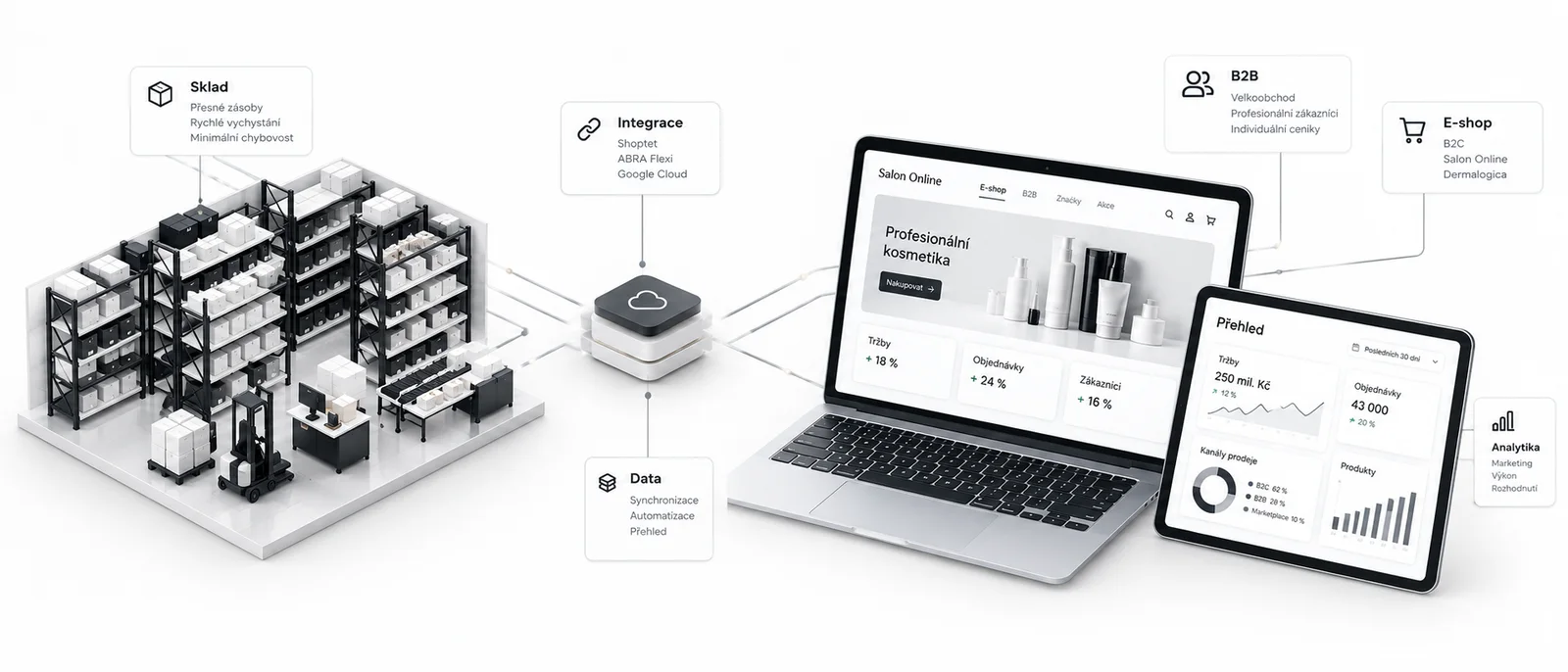
Before
- The B2C e‑shops and the B2B e‑commerce were each configured differently.
- There were many manual inputs.
- There was no strong category and filter structure.
- Systems and processes were not set up to work as one whole.
- The warehouse in 2019: approximately 4 employees plus 2 temporary workers – and error rates were rising with volume.
My role
As project lead, I:
- created a new concept and designed a new responsive design,
- configured the e‑shops on Shoptet and standardised their structure,
- reworked categories and filters,
- configured systems and handled integrations and data synchronisation,
- automated processes and removed manual steps,
- redesigned warehouse processes – picking, order assembly and packing,
- coordinated external specialists and prepared their briefs,
- checked implementation and tested the results.
Result
Scale of the e‑commerce environment
The business operated two B2C e‑shops – Salon Online and Dermalogica – alongside its B2B e‑commerce operations. I supported the digital and e‑commerce transformation of this interconnected business environment between 2019 and 2026.
Business growth context
Between 2019 and 2025, the business grew from approximately CZK 110 million in annual gross revenue and 23,000 orders to CZK 250 million in annual gross revenue and 43,000 orders. This growth reflects the work of the entire company, not the contribution of any single individual. These figures illustrate the scale and complexity of the business environment in which I supported digital and e‑commerce transformation.
Operational result
Errors in picking, order assembly and packing were reduced by approximately 90% – while the warehouse now handles all orders and complaints with a team of 5 people.
- standardisation – e‑shops with the same logic and structure,
- automation – less manual work and fewer errors,
- readiness for further growth – every next step builds on a solid foundation.
You know your e‑commerce needs to change, but don’t know where to start?
We will review the current state, identify the priorities, and I will tell you what I would do first.